Structural Systems in Taiwan

Taipei, Taiwan
Why you should go
- Advance your degree: Take two core UC San Diego Structural Engineering courses and build the foundation for advanced coursework. Studying static and dynamic structural behavior together will help you connect concepts across both classes.
- Connect classroom theory to real engineering challenges: Taiwan’s experience with earthquakes and typhoons provides an ideal setting to examine how engineers design infrastructure to withstand extreme events. Planned technical excursions and local guest speakers will bring your coursework into focus and reveal the human impact of engineering decisions.
- Learn from professors with deep connections to Taiwan: Professors Ken Loh and Chin-Hsiung Loh bring extensive teaching experience, firsthand knowledge of Taiwan, and professional relationships that open doors to distinctive learning opportunities beyond the classroom.
- Build connections across cultures: Engage with local Taiwanese students, exchange perspectives, and gain experience learning in an international setting. Develop friendships and a broader understanding of how engineers approach shared challenges.
- Experience life in Taipei: Discover lively night markets, explore local food and cultural traditions, and enjoy opportunities to experience Taiwan’s natural landscapes. Taipei’s extensive public transportation makes the city an inviting base for exploration.
Courses
- SE 130GS: Structural Analysis I (draft PDF)
- SE 101GS: Mechanics III: Vibrations (draft PDF)
*courses equivalent to SE 130A & SE 101C respectively
Faculty Leaders
Kenneth Lohkjloh@ucsd.edu
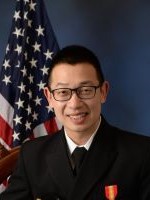 Dr. Ken Loh is the TaylorMade Golf Chancellor’s Endowed Professor in the Department of Structural Engineering at UC San Diego and previously served as the Department Vice Chair. He is the Director of the Active, Responsive, Multifunctional, and Ordered-materials Research (ARMOR) Lab and is the Director of the Jacobs School of Engineering, Center for Extreme Events Research (CEER). He is also an affiliate faculty member of the Materials Science & Engineering Program. His research interests are in multifunctional and stimuli-responsive materials, tomographic imaging techniques, wearable sensors, active metamaterials, and soft material actuators applied towards solving problems related to human performance, structural sustainment, and human-structure interactions. In addition to academic career, Dr. Loh is a Junior Officer in the U.S. Navy Reserve and a co-founder of a start-up company called JAK Labs. Dr. Loh received his B.S. in Civil Engineering from Johns Hopkins University and graduate degrees at the University of Michigan.
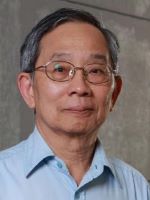 Prof. Chin-Hsiung (C.H.) Loh was previously a Professor of Civil Engineering at National Central University and then Professor and later Distinguished Professor National Taiwan University. He is currently an Adjunct Professor at the University of California San Diego, as well as an Adjunct Professor at the National Taiwan University. The course he offers in both universities is Spectral Analysis and Signal Processing. Professor Loh’s research is in Structural Health Monitoring and Probabilistic Seismic Hazard Analysis. He is a fellow member of both Chinese Taiwan Society of Earthquake Engineering and Chinese (Taiwan) Society of Structural Engineering. Over the last 37 years, he has dedicated his career to creating new knowledge in the area of structural resilience with specific focus on earthquake hazard mitigation, particularly on Structural Health Monitoring (SHM). Prof. Chin-Hsiung (C.H.) Loh received his Ph.D. degree from National Taiwan university.
Who should go
The cross-disciplinary nature of this field and these courses mean that students in all areas of science, technology, engineering, and mathematics (STEM) will gain tremendously from these courses. The program is open to all STEM majors. It is ideal for Structural Engineering undergraduates who want to complete core degree requirements while experiencing life and learning abroad. Whether you are preparing for advanced coursework, a transfer student building your foundation, or looking for a meaningful way to make progress over the summer, this Global Seminar offers the opportunity to study structural analysis and vibrations in a setting where engineering meets real-world challenges. Students from related engineering disciplines who meet the course prerequisites and whose academic goals align with SE 101C and SE 130A are also encouraged to explore the program.
The following prerequisites must all be completed prior to the July start:
- SE-101B
- MATH-018 or MATH-031AH, and
- SE-110A or MAE-131A
Information Sessions
- Program "Meet the Professor" session: Wednesday, Nov. 4, 12:00 - 1:00 PM
- Register here for the live Zoom link, and/or to get the post-session recording.
Dates
| Departure from U.S.: | Fri/Sat., July 30/31, 2027 |
|---|---|
| Arrival: | Sun., August 1, 2027 |
| Mandatory Orientation: | Mon., August 2, 2027 |
| First Day of Class: | Mon., August 2, 2027 |
| Last Day of Class: | Fri., Sept. 3, 2027 |
| Departure for the U.S. (or personal travel): |
Sat., Sept. 4, 2027 |
Flight Information
- You will be responsible for purchasing your own airplane tickets, and your program coordinator will provide guidelines and resources during the pre-departure process to help you find an appropriate flight.
- Do not purchase plane tickets until the program is confirmed. All approved applicants will be notified by e-mail when the program has reached minimum enrollment.
Global Seminar Fees
All fees subject to change. See https://summersession.ucsd.edu/tuition/tuition.html for current tuition and campus-based fees.
| UCSD | Other UC | Non-UC | |
|---|---|---|---|
| Program Cost: (includes $500 administrative fee) |
TBD | TBD | TBD |
| Estimated Tuition and Campus-Based Fees: |
$2,742.23 | $2,792.23 | $3,826.23 |
| Total: (not including airfare or personal expenses) |
TBD | TBD | TBD |
Budget Calculator
- Coming soon!
Funding Options
See the funding options page to learn how financial aid and scholarships can help you pay for this program.
Technical Site Visits
- National Center for Research on Earthquake Engineering (NCREE)
- Large-scale shaking table for full-scale structural testing
- Reaction wall and strong floor for cyclic load tests
- National Taiwan University Civil Engineering Research Building
- Base isolated (mid-story) building and viscous dampers for seismic protection
- Monitoring system
- Taipei 101 Building: 660 metric ton steel pendulum tuned mass damper suspended between 87th and 92nd floor
- 9-21 Chi-Chi Earthquake Memorial Park in Nantou, Taiwan
Cultural and Nature Excursions
- National Palace Museum
- Chiang Kai Shek Memorial
- Lungshan Temple
- Beitou Hot Springs
- Dihua Street
- Yangmingshan National Park
Excursions are subject to change without prior notice. No refunds are possible.
Housing
- Double-occupancy hotel rooms
- Private in-room bathrooms
- Linens provided
- Air conditioning and Wi-Fi
Included Meals
- Welcome dinner upon arrival
- Farewell dinner at end of program
Classroom and Computer Access
- Classroom space at National Taiwan University or the National Center for Research on Earthquake Engineering
- There is no computer lab available - plan to bring a laptop.
- Wireless access may be intermittent due to local conditions. No refunds or price adjustments are possible.
Transportation
- Transportation by private bus to and from Taiwan Taoyuan International Airport to the student housing is included in the program.
- Transportation for all out of town excursions
Phones
- Information about how to obtain a local SIM card will be provided at the pre-departure orientation.
- Students will be responsible to purchase their own calling time/minutes.
Insurance, Health, and Safety
- All students will be registered for UC travel insurance This is free coverage, but registration is required prior to departure.
- An in-depth orientation will be given on the morning after arrival, including health and safety procedures.
- Program partner staff will be available by telephone after hours.